

What Is the Best Pillow for Neck Pain? Complete Guide
Ever wake up with a stiff neck and wonder if your pillow is the reason behind it? If so, you might be correct. An unsupportive pillow can leave your head and neck in an awkward position for hours, contributing to severe neck pain.
The best pillow for neck pain should provide balanced support to the curve of your neck, comfortable cushioning, and the ideal pressure distribution for restful sleep. Furthermore, it should prevent your head from sinking too deeply or sitting too high.
Now, the question is- “What makes a pillow effective for neck support?”
This blog post covers the best pillow types, materials, and features to look for while choosing the ideal neck support pillow that eliminates chronic pain and promotes sound sleep.
Recommended Products


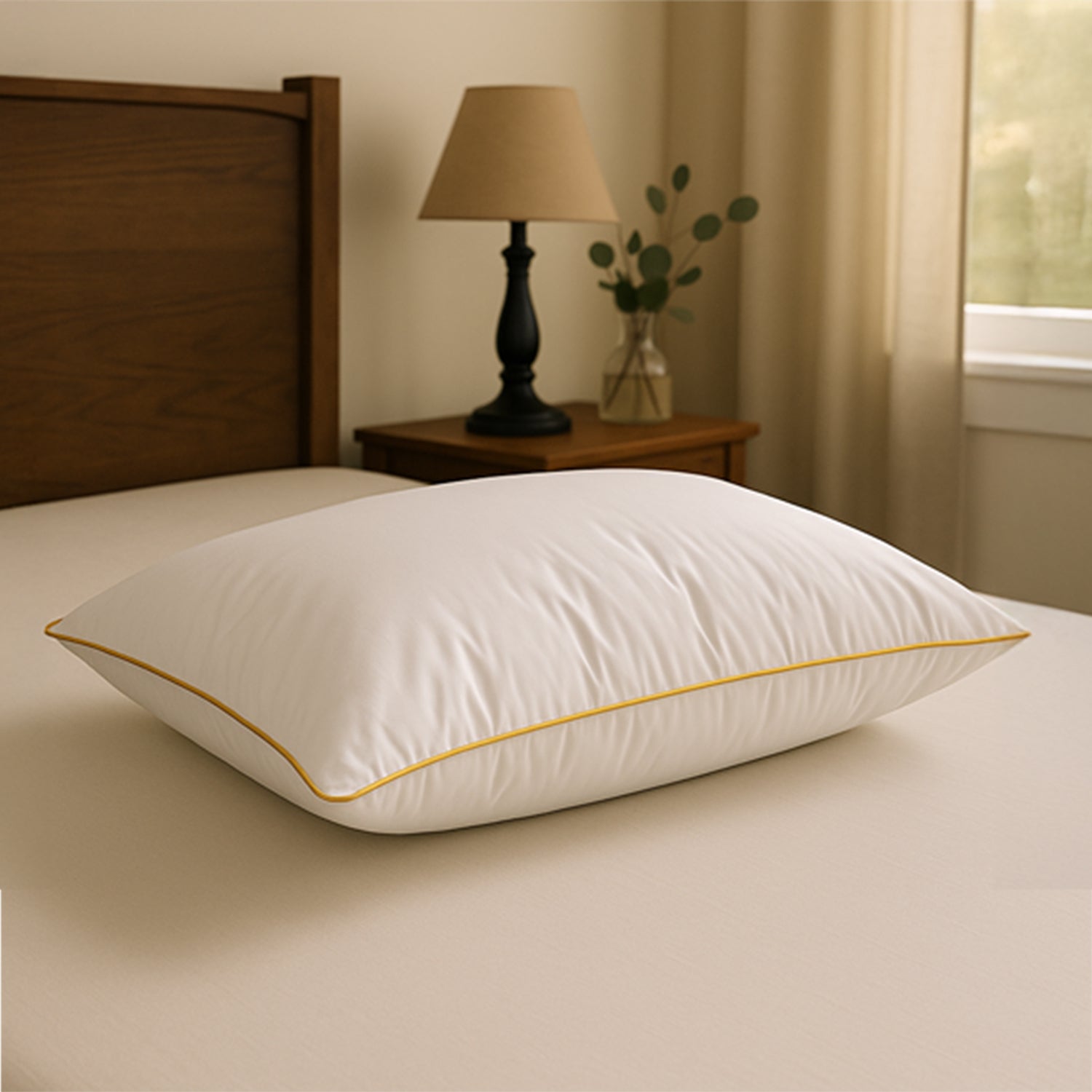





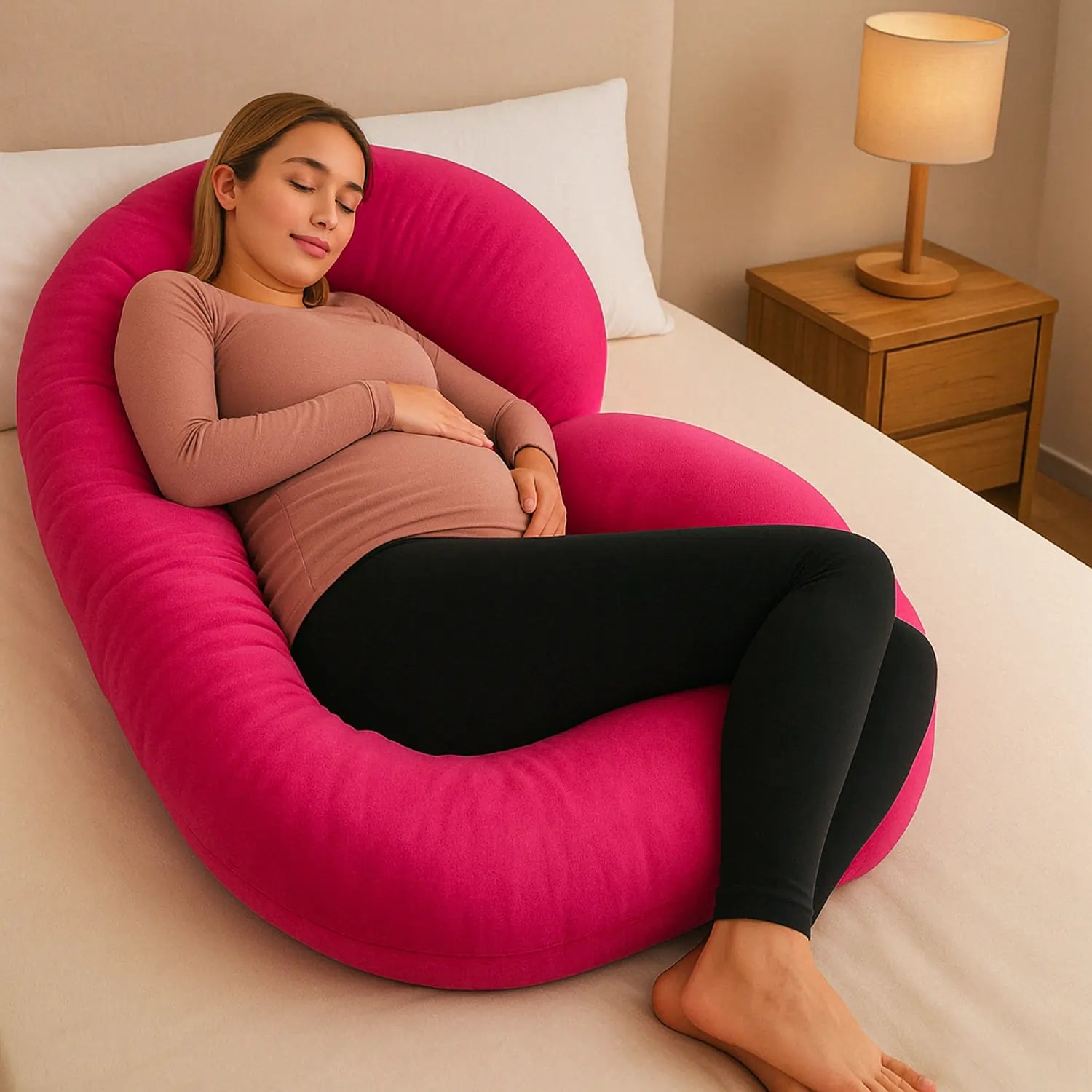
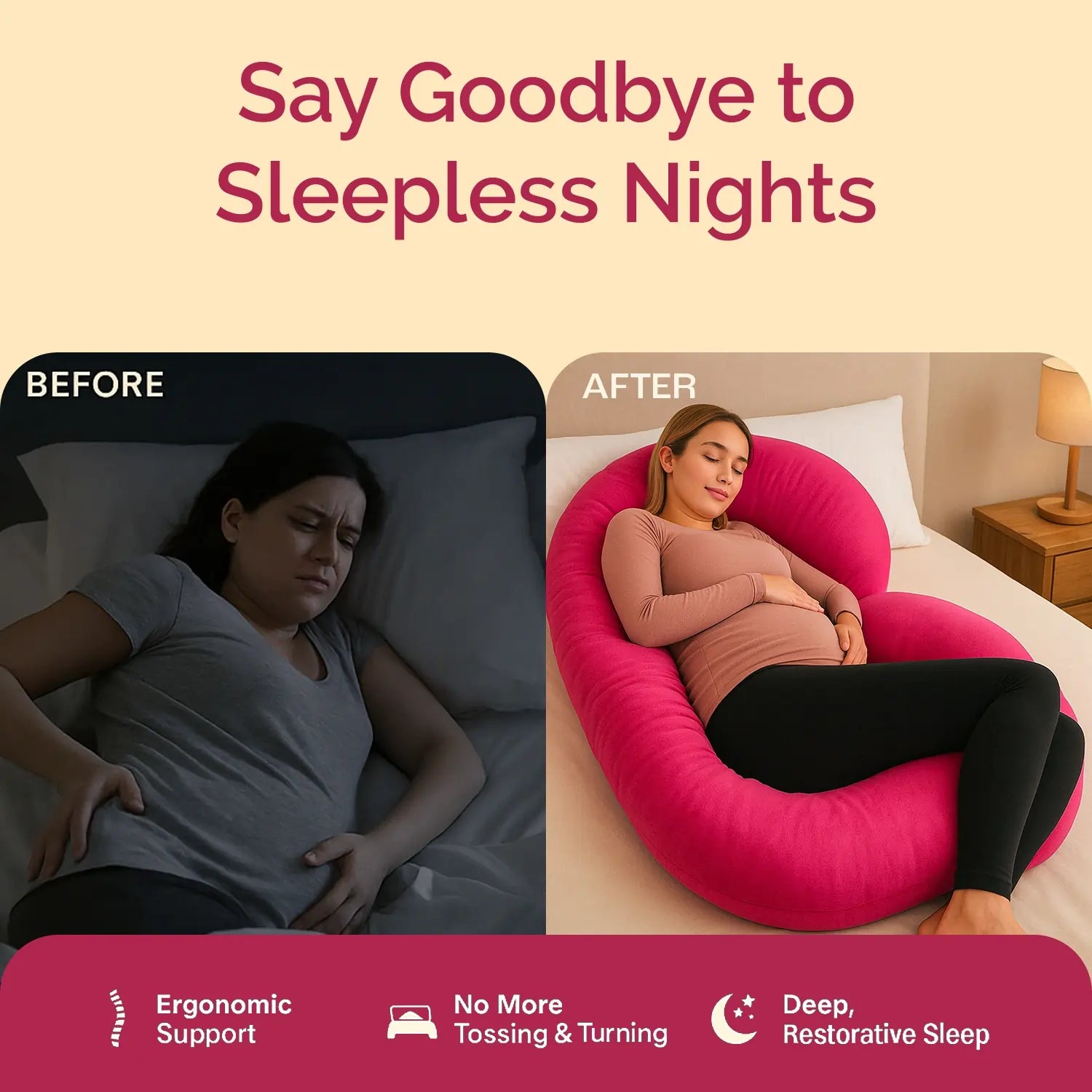





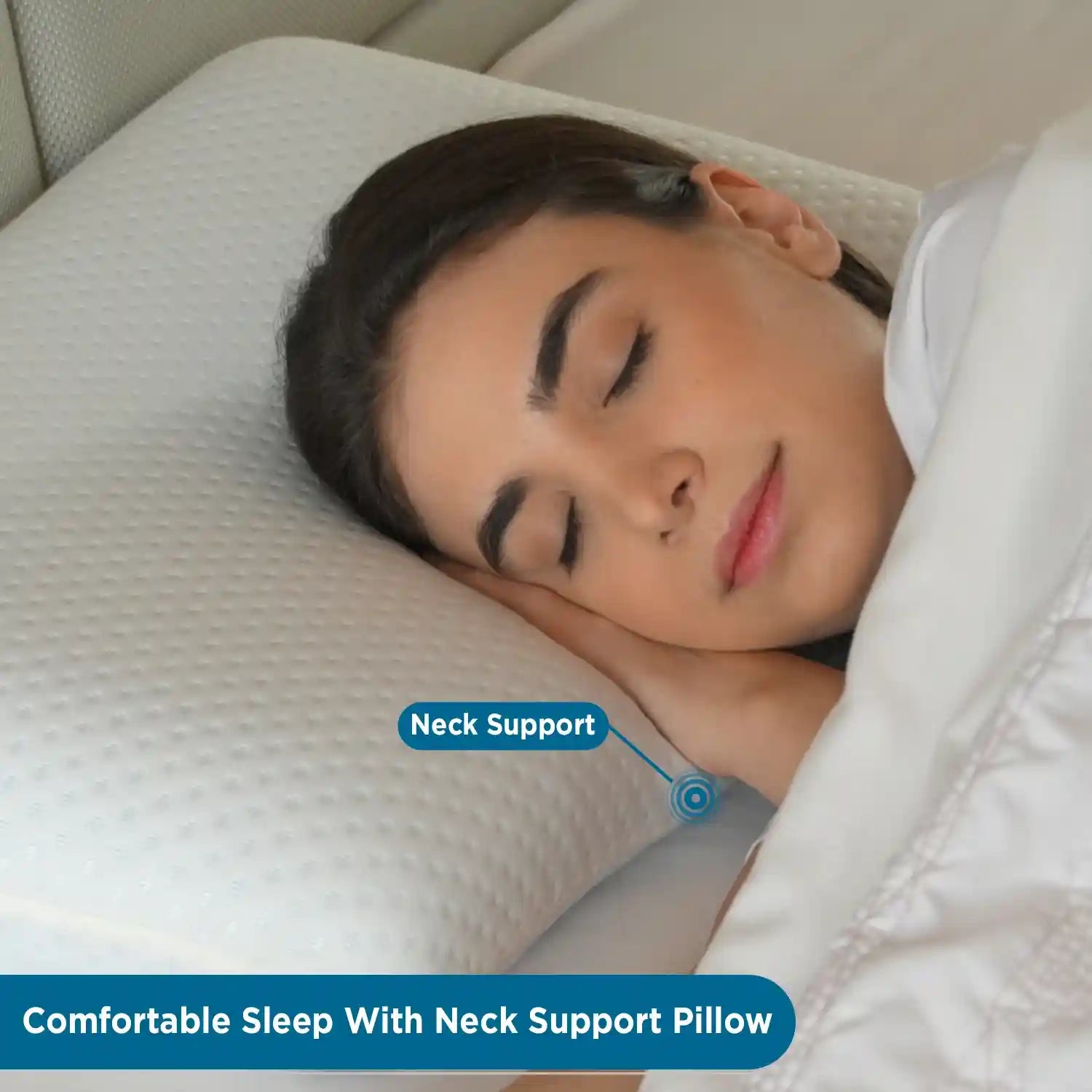








How Does a Pillow Affect Neck Pain?
A pillow affects neck pain by determining how well your head, neck, and spine stay aligned during sleep. The wrong height or firmness can strain the neck, while proper support helps maintain a neutral position.
Here are the main ways your pillow can influence neck comfort.
Pillow is too high
It pushes your head upward and can flex your neck forward, potentially increasing muscle strain.
Pillow is too flat
It can cause your head to drop down and lose neck position.
Pillow is too soft
Your head may sink into the pillow too deeply, and you may not get consistent support, and your neck may end up awkward.
Pillow too firm
It can cause pressure issues and will also not allow you to sleep in a natural position.
How Does Proper Pillow Selection Support Spinal Alignment and Comfortable Sleep?
The right pillow supports spinal alignment by keeping your head and neck in a neutral position, which can reduce strain and improve sleeping comfort.
Here’s how proper pillow selection supports spinal alignment and comfortable sleep:
Keeps The Neck in A Neutral Position
The right neck support pillow will keep your head at a comfortable height, so that your neck is aligned with your spine. A pillow that is too high can thrust your head forward; one that is too flat can let your neck drop down toward the mattress.
Supports The Natural Curve of The Neck
A cervical pillow for neck pain can provide targeted support beneath the neck while cushioning the head. This design can help maintain the natural cervical curve instead of leaving unsupported gaps between your neck and the pillow.
Distributes Pressure More Evenly
A good pillow for neck pain adjusts so that it does not put all the pressure on the same spot on the head and neck. Materials like memory foam can mold to the body and allow for uniform cushioning all night long.
Matches Your Sleeping Position
Your sleeping position affects the pillow height you need for neck pain. Side sleepers generally require more height to fill the space between the shoulder and head, while back sleepers often need moderate support. Stomach sleepers typically benefit from a thinner pillow to avoid excessive neck positioning.
Helps Reduce Morning Stiffness
Better neck alignment while sleeping can avoid excessive force on the muscles and joints surrounding the neck. The right pillow support may also prevent you from waking up stiff.
What Type of Pillow Is Best for Neck Pain?
A cervical or contour pillow is generally the best type of pillow for neck pain because it provides targeted support and helps keep your head and neck aligned during sleep.
Here are the main pillow types to consider for better neck support:
Orthopedic Cervical Pillow
This cervical pillow for neck pain provides targeted support around the neck and helps maintain a comfortable sleeping position.
Orthopedic Cervical Pillow with Cooling Gel
It combines ergonomic neck support with cooling gel and is a great option for those who sleep on their backs and want good support but better temperature regulation.
Contour Orthopedic Pillow
The contour orthopedic pillow shape is contoured to the anatomical curve of the neck and offers support to the head and cervical region.
Contour Orthopedic Pillow with Ventilated Cooling Gel
Its contoured shape, cooling gel, and ventilation make it a good pillow for neck support and airflow.
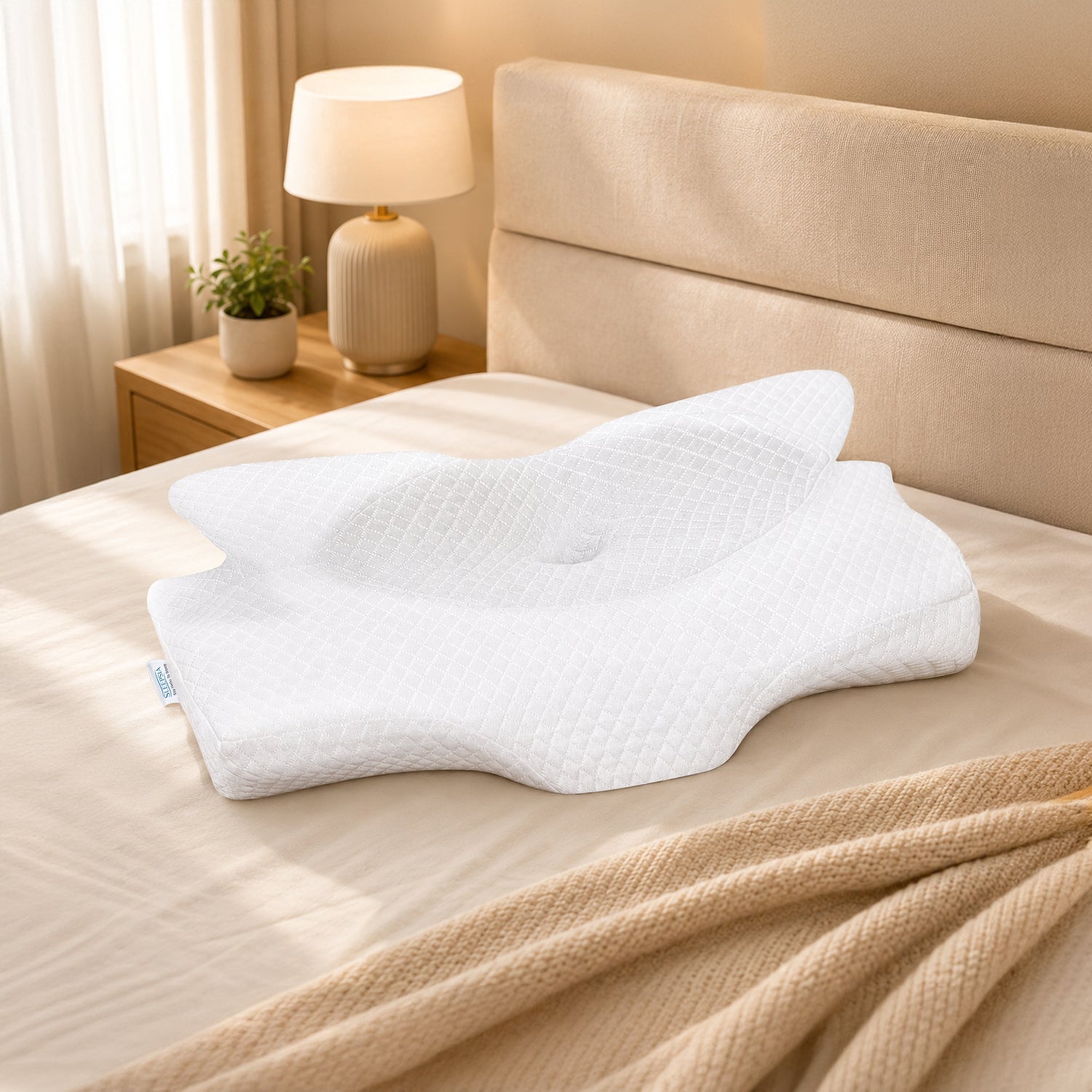
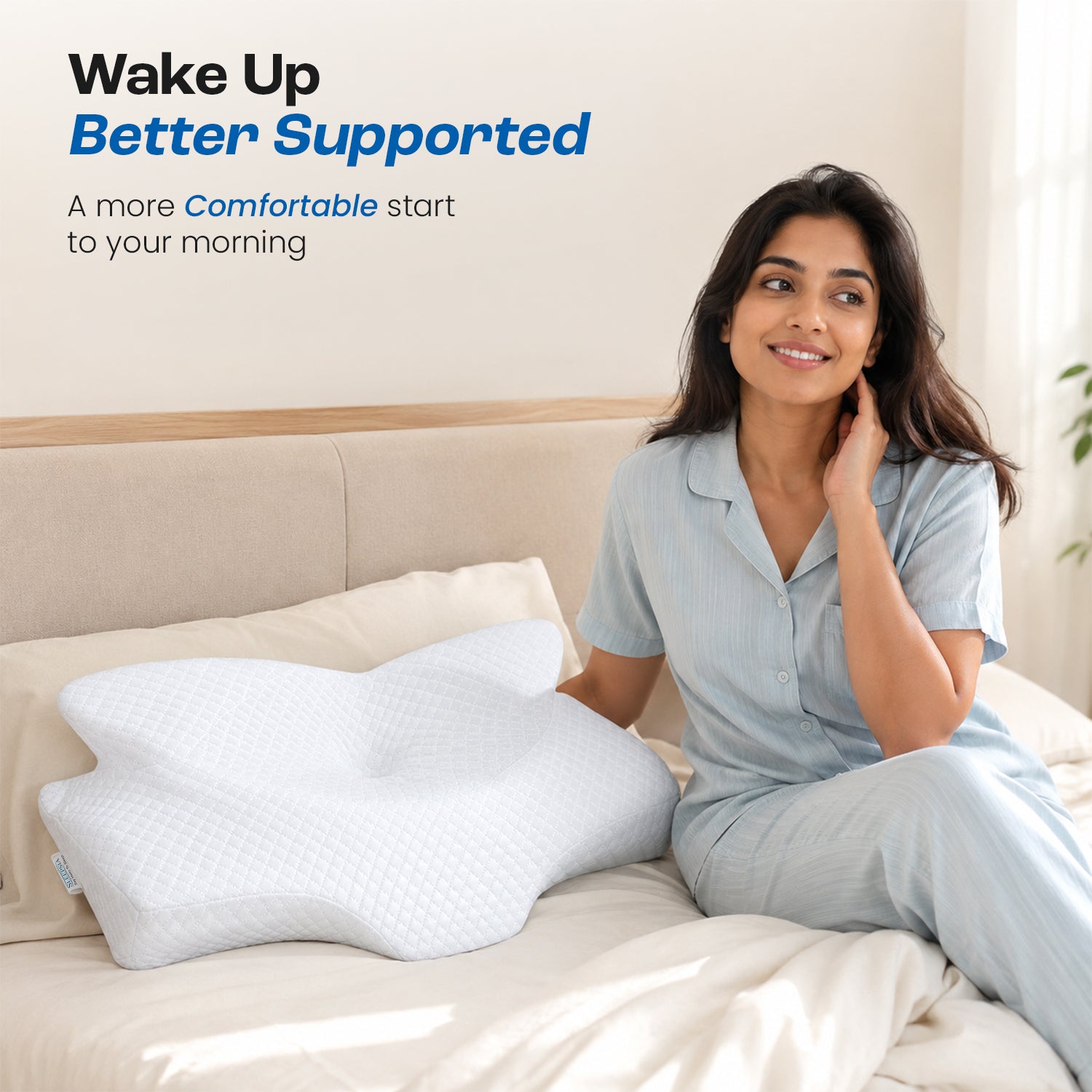
Butterfly Pillow for Neck Pain
Its butterfly-shaped pillow design provides support around the head and neck and can accommodate different sleeping positions.
What Is the Best Pillow for Neck Pain for Different Sleeping Positions?
The best pillow for neck pain depends on your sleeping position and the amount of support needed to keep your neck neutral. Side sleepers generally need a higher, firmer pillow, while back sleepers usually benefit from medium-height support, and stomach sleepers should use a thin, softer pillow. Here are the best pillow choices for each sleeping position:
Side Sleepers
Choose a firmer, higher-loft pillow that fills the space between your head and shoulder without tilting your neck upward. A contoured or cervical pillow can provide additional support.
Back Sleepers
Use a medium-firm, mid-height pillow that keeps the natural curve of your neck and doesn’t push your head too far forward. A cervical contour pillow may also be appropriate in this position.
Stomach Sleepers
A thinner, softer pillow or no head pillow at all if that feels comfortable. Sometimes a thick pillow can cause neck extension or rotation, and a switch to your side or your back may relieve the problem.
Combination Sleepers
A good adjustable-fill pillow is easier to keep supported when you switch positions.
What Pillow Materials Are Best for Neck Support?
Memory foam is one of the best pillow materials for neck support because it contours to your head and neck while providing consistent cushioning.
Here are the main pillow materials for neck pain to consider:
Memory Foam
It molds to the shape of your head and neck, providing targeted cushioning and helping maintain proper spinal alignment. Its structured support makes it a practical choice when you need a neck support pillow that maintains its shape.
Gel-Infused Memory Foam
This combines the contouring properties of memory foam with cooling gel to help manage heat while maintaining supportive cushioning. It can be useful if you want neck pain relief while sleeping without sacrificing comfort.
Ventilated Memory Foam
Airflow channels improve ventilation and help reduce heat build-up. This construction provides structured support while making the pillow more comfortable for people who tend to sleep warm.
Bamboo and Memory Foam
This combination pairs memory foam with a bamboo layer and cooling properties. It adds breathability and provides cushioning around the head and neck for a more comfortable sleep surface.
What Features Should You Look for in a Pillow for Neck Pain?
A pillow for neck pain should offer the right loft, medium-firm support, and a shape that keeps your head, neck, and spine aligned. Choosing these features based on your sleeping position can improve neck support without compromising comfort. Here are the key features to look for while choosing a pillow for neck support.
Contoured Shape
A cervical or wave-shaped neck support pillow can follow the natural curve of your neck and provide targeted support while you sleep.
Correct Loft
Pillow height for neck pain depends on your sleeping position. Side sleepers generally need a higher loft to fill the gap between the head and shoulder, while back and stomach sleepers typically need a lower loft.
Medium-Firm Support
A medium-firm pillow for neck pain can support your head without allowing it to sink too deeply or creating excessive pressure.
Supportive Material
Memory foam and latex provide stable support while conforming to the contours of your head and neck.
Adjustable Fill
An adjustable pillow for neck pain lets you add or remove filling to achieve a more suitable height for your sleeping position.
Breathable Construction
If you sleep hot, look for breathable materials, ventilated foam, or a cooling cover with good airflow for your pillow.
Shape Retention
The cervical contour pillow must not flatten under the weight of your head; rather, it should keep its form and support you all night long.
When Should You See a Doctor for Neck Pain?
You should see a doctor if neck pain is severe, persistent, worsening, or accompanied by symptoms such as numbness, weakness, or pain that spreads into your arms. Mild pain that goes away with rest and simple self-care may not need immediate medical attention. Here are situations when you should seek medical care:
Pain Persists
See a doctor if your neck pain does not improve after several days of home care or keeps returning.
Pain Follows an Injury
Get medical evaluation after a fall, accident, or other significant impact, especially if the pain is severe.
Numbness Or Tingling
Seek care if you experience numbness, pins and needles, or altered sensation in your neck, shoulders, arms, or hands.
Muscle Weakness
New or worsening weakness in an arm or hand requires prompt medical assessment.
Pain Radiates
Consult a doctor if neck pain radiates down into your shoulder, arm, or hand.
Severe Symptoms
Seek urgent care if neck pain occurs with severe headache, fever, difficulty walking, loss of coordination, or problems controlling your bladder or bowel.
Obstructs Your Sleep or Work
Go to a doctor if chronic neck pain disrupts your sleep, affects your job, or limits your ability to move or perform daily tasks.
Conclusion
The best pillow for neck pain is usually a medium-firm cervical or contour pillow that keeps your head, neck, and spine comfortably aligned while you sleep. Choose the pillow height and firmness according to your sleeping position, body shape, and support needs.
Like latex, memory foam creates firm neck support, and shredded versions are adjustable for loft. Pillows should be generally thicker and firmer for side sleepers, medium height for back sleepers, and thinner for stomach sleepers. Other elements that contribute to comfort are contouring, loft, breathability, and shape retention. You should see a doctor if your neck pain is persistent, worsening, is due to injury, or is accompanied by numbness, tingling, weakness, or radiating pain in your arms.
FAQs
Q1: Can a pillow help with neck pain caused by poor posture?Ans: Yes, a supportive pillow can reduce overnight strain, but it cannot correct poor daytime posture on its own.
Q2: Is memory foam better than cotton for neck pain?Ans: Unlike regular cotton-filled pillows, memory foam usually offers more directed support to the neck. It conforms to the head and neck rather than compressing under weight.
Q3: Can sleeping on a pillow that is too soft cause neck pain?Ans: Yes, an overly soft pillow can allow your head to sink too far and disrupt neutral neck alignment.
Q4: Does pillowcase material affect neck pain?Ans: Pillowcase material usually has little direct effect on neck pain, but it can affect comfort and temperature.
Q5: Can changing your pillow improve sleep quality?Ans: Yes, replacing an unsuitable pillow can improve comfort and help maintain better neck alignment during sleep.
Q6: Is an expensive pillow better for neck support?Ans: No, a higher price does not guarantee better neck support.
Q7: Can neck pain be caused by sleeping in the wrong position?Ans: Yes, an awkward sleeping position can place prolonged stress on the muscles and joints of the neck.
Q8: Should I change my pillow if I wake up with neck pain every morning?Ans: Yes, consistently waking with neck pain is a good reason to reassess your pillow and sleeping position.
Q9: Can a pillow help with shoulder and neck pain at the same time?Ans: Yes, the right pillow can support both the neck and shoulder area by helping maintain better upper-body alignment.
Q10: Does pillow size matter for neck support?Ans: Yes, pillow size can affect how consistently your head and neck remain supported during sleep.
Recent Posts

Benefits of Utkatasana (Chair Pose) & How to Practice It

Benefits of Garudasana (Eagle Pose) & How to Practice It

Rakhi Gift Ideas for Your Sister: Give Her the Gift of Better Sleep

What Is the Best Pillow for Side Sleepers? Complete Guide

Benefits of Paschim Namaskarasana (Reverse Prayer Pose) & How to Practice It

Benefits of Prasarita Padahastasana (Wide-Leg Forward Bend) & How to Practice

