

What Is the Best Pillow for Side Sleepers? Complete Guide
Side sleeping is one of the most common sleep positions, but it also creates one of the biggest support challenges for a pillow. When you lie on your side, a natural gap forms between your head, neck, shoulder, and mattress. That gap needs to be filled correctly. If the pillow is too low, the head drops toward the mattress and the neck bends downward. If it is too high, the head is pushed upward, creating the opposite tilt. Either position can leave the neck and shoulders under unnecessary strain for hours, which may contribute to stiffness or discomfort when you wake up.
A pillow for side sleepers is not simply a thicker version of a standard pillow. It should have enough loft to fill the shoulder-to-mattress gap, enough support to hold its shape under pressure, and the right firmness to keep the head, neck, and spine in a neutral position. In general, medium-to-high loft and medium to medium-firm support work well for many side sleepers. However, the ideal pillow varies from person to person. Shoulder width, body size, mattress firmness, and individual comfort all affect how much height and support you need. The best pillow is one that maintains proper alignment without feeling too hard, too high, or too flat throughout the night.
Recommended Products


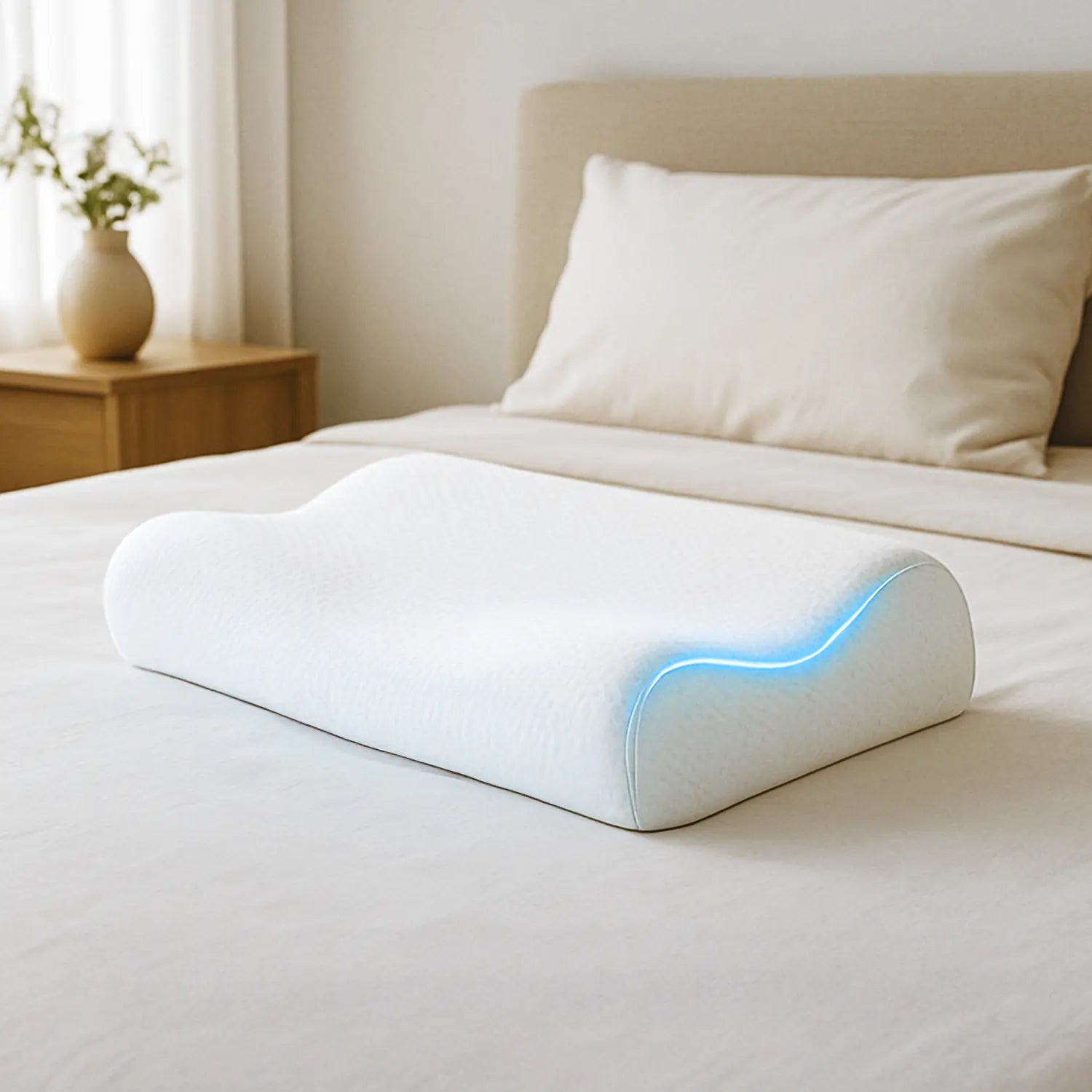
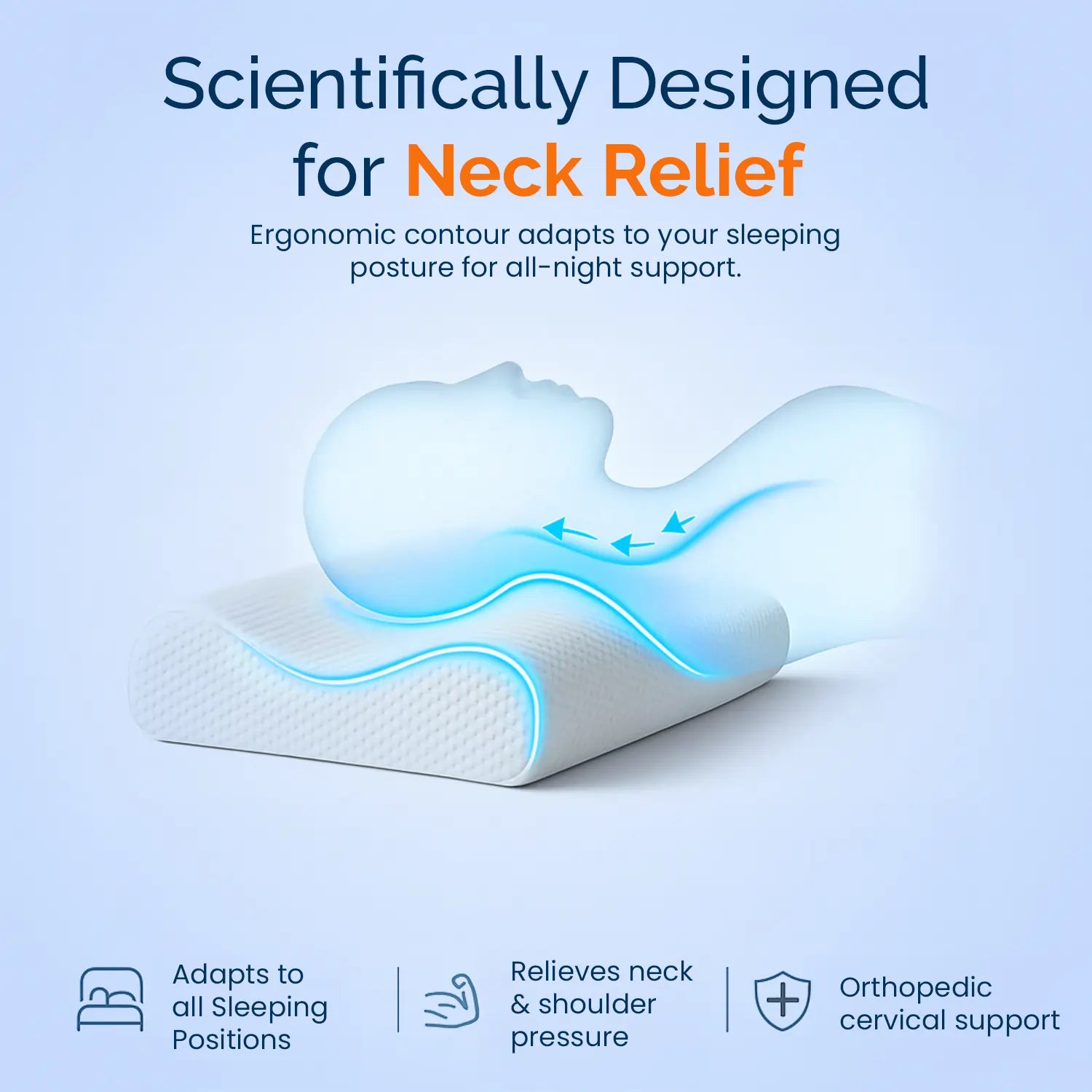
Which Pillow Type Is Best for Side Sleepers?
Several pillow types can work well for side sleepers, but the best choice depends on your preferred firmness, level of contouring, temperature needs, and whether you need adjustable support. The key is to choose a pillow that provides enough loft and support to keep your head and neck comfortably aligned.
Memory Foam Pillows
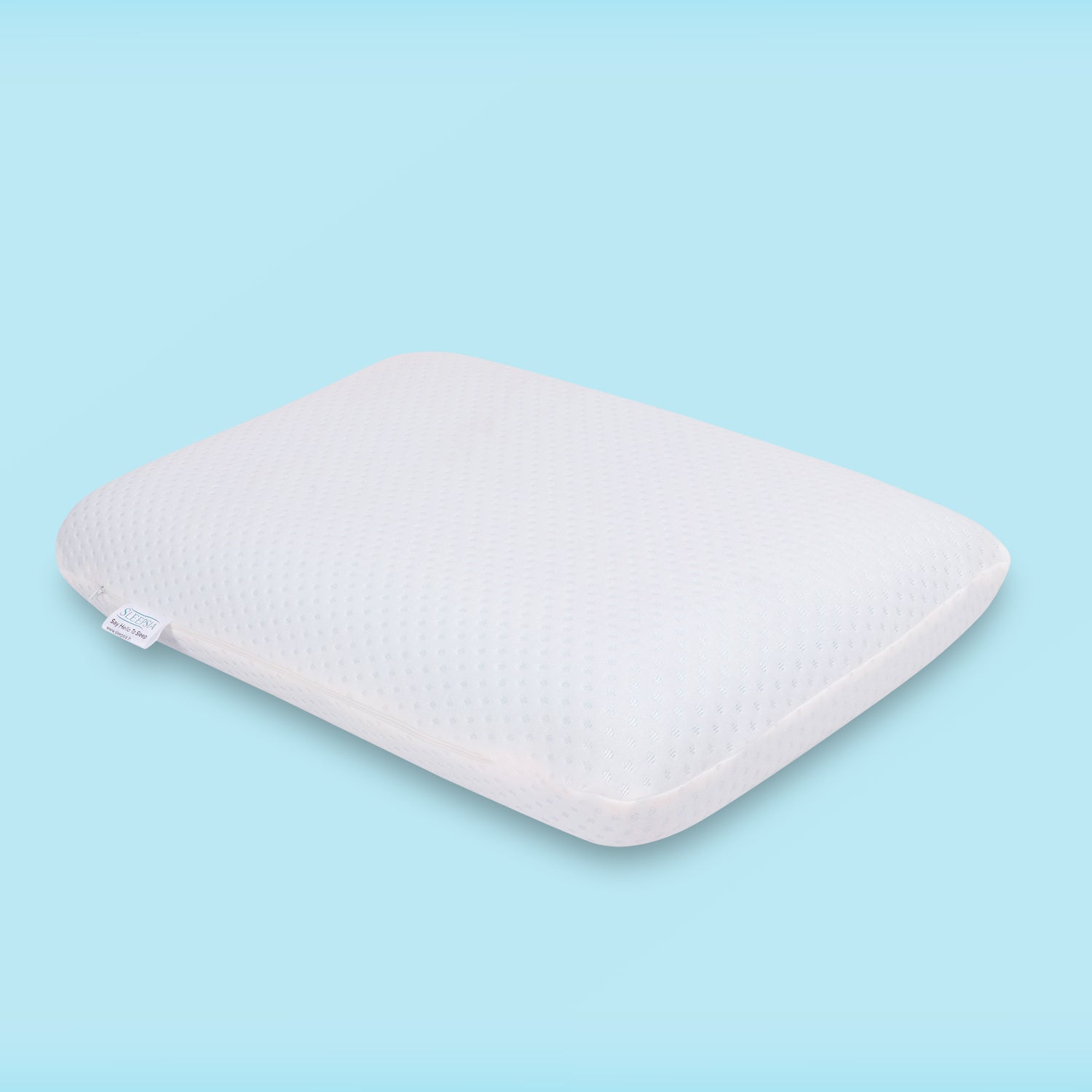
Memory foam is a practical choice for side sleepers who want structured support and a contouring feel. It responds to pressure and conforms to the shape of the head and neck without compressing completely flat.
Memory foam may suit:
- Side sleepers who want noticeable neck support
- People who prefer a more structured pillow
- Sleepers who dislike pillows that flatten quickly
- Combination sleepers who move between their side and back
- People who prefer a contouring feel
Traditional memory foam can retain heat, so hot sleepers may prefer ventilated foam, gel-infused foam, or a breathable pillow cover.
Contour or Cervical Pillows
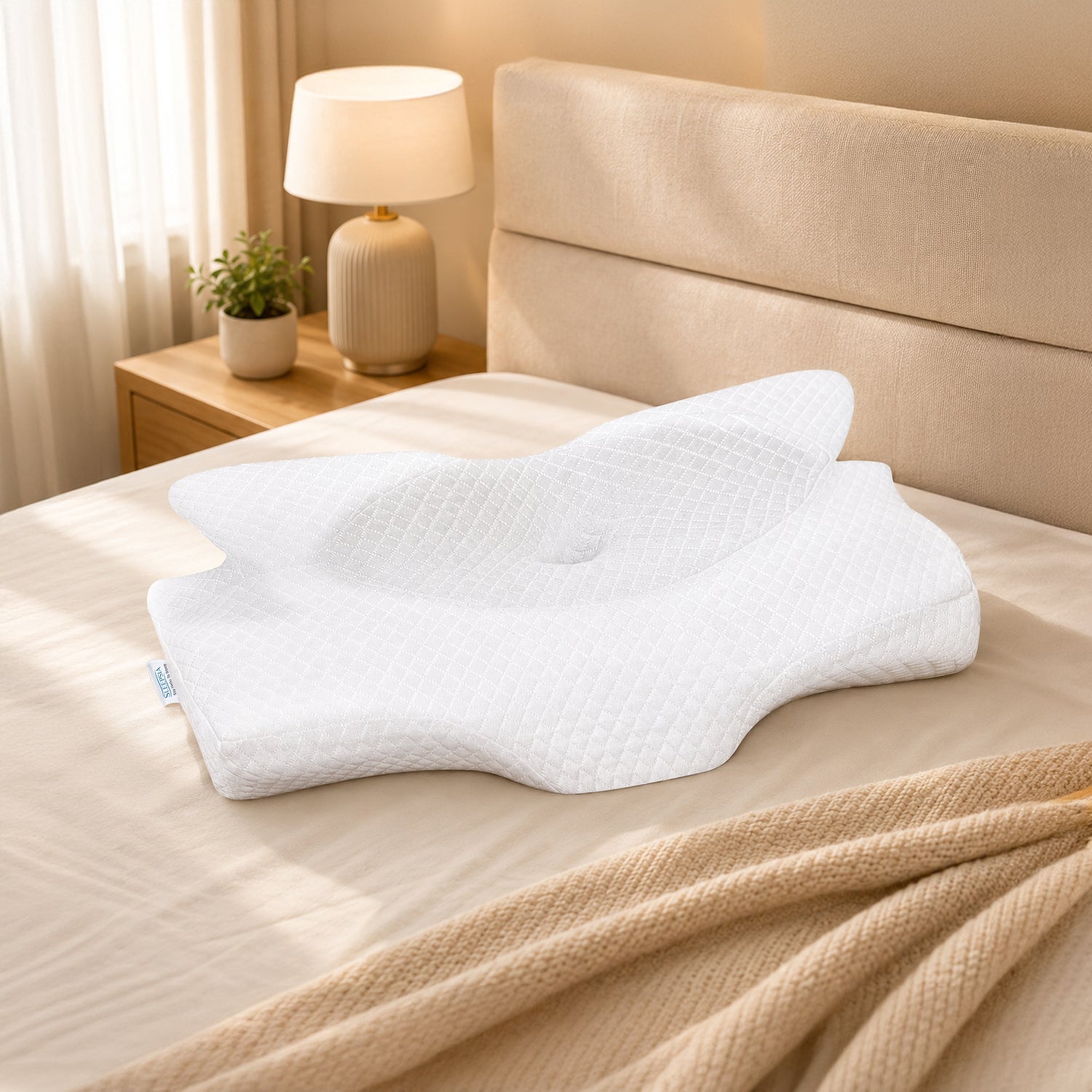
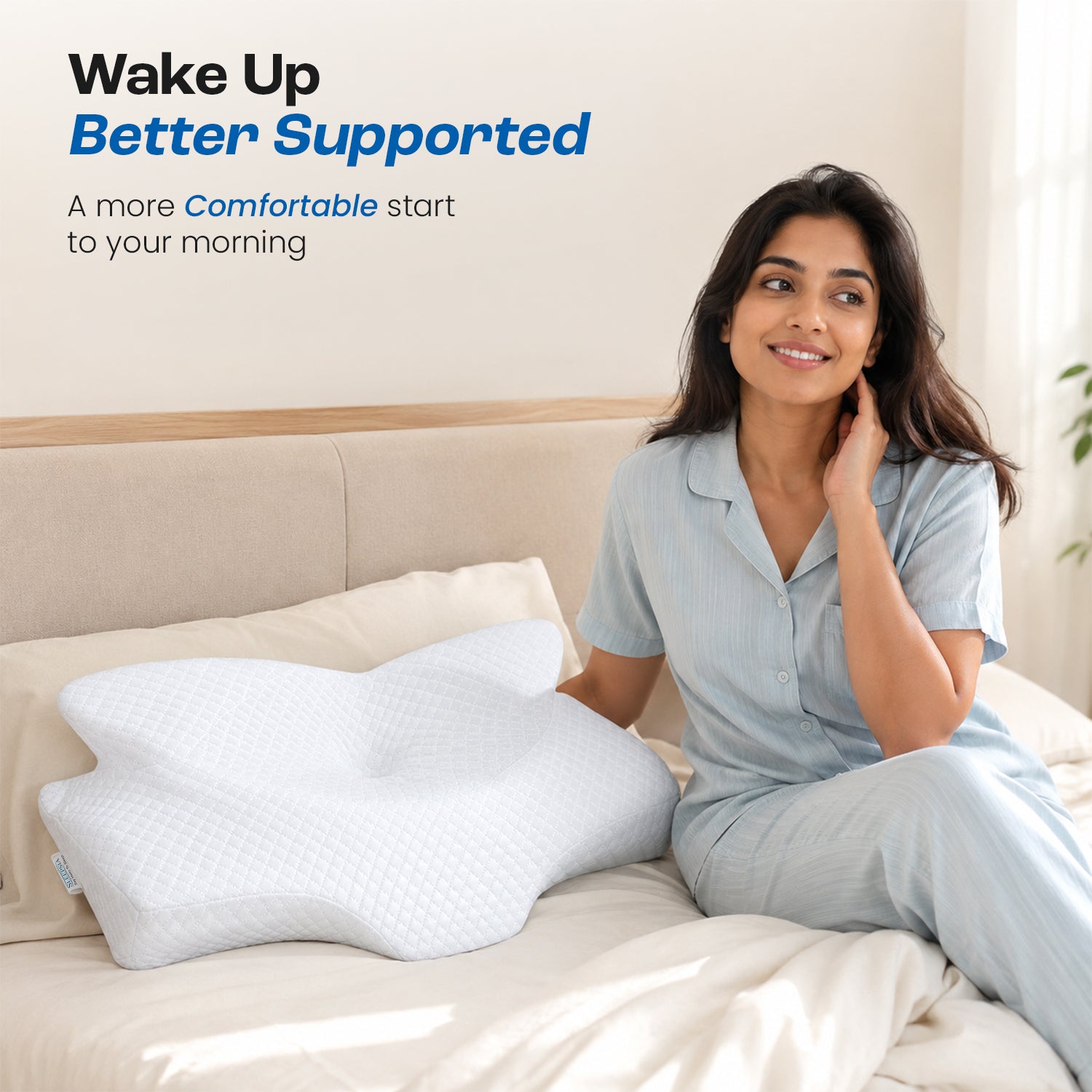
Cervical pillows have a shaped design that supports the head and neck while maintaining the natural curve of the cervical spine. Many contour pillows have different heights on each side, allowing sleepers to choose the height that feels most comfortable.
They can be particularly useful for side sleepers who prefer structured support rather than the softer, less stable feel of a traditional fibre pillow.
For example, the Sleepsia Orthopedic Memory Foam Cervical Pillow features a contoured memory foam design and is marketed for both side and back sleepers. However, its height should still be considered alongside your shoulder width, body size, and mattress firmness rather than treated as a universal fit.
Gel-Infused Memory Foam Pillows
Gel-infused memory foam can be a good option for side sleepers who like the support and contouring of memory foam but are concerned about heat. These pillows combine the pressure-relieving properties of memory foam with gel or other cooling-focused materials designed to improve temperature comfort. The Memory Foam Cervical Pillow with cooling gel, for example, combines a contoured shape with gel-infused memory foam and is designed for side and back sleepers.
Latex Pillows
Latex offers a different feel from memory foam. It generally feels more responsive and springy, pushing back against pressure instead of allowing the head to sink slowly into the pillow.
Latex may suit:
- Sleepers who prefer responsive support
- People who dislike the deep contouring feel of memory foam
- Side sleepers who want good shape retention
- People who prefer a more buoyant pillow surface
Some latex pillows use shredded latex, which can also allow users to adjust the filling and change the pillow's loft.
Adjustable Pillows
Adjustable pillows can be useful when you are unsure about the right pillow height. They typically allow you to add or remove filling until you find a loft that provides comfortable support.
They may be particularly helpful for:
- People with broad or narrow shoulders
- Combination sleepers
- Couples with different pillow preferences
- People switching from a very soft pillow
- Sleepers who are still determining their ideal loft
An adjustable pillow can also be useful if your preferred sleeping position changes over time.
Fibre and Down-Alternative Pillows
Fibre and down-alternative pillows generally provide a softer, more traditional feel. They can work for side sleepers when they contain enough filling to maintain their loft and provide adequate support.
The main consideration is compression. If the pillow becomes too flat under the weight of your head, it may no longer fill the space between your shoulder and mattress effectively. Instead of choosing a pillow simply because it feels soft, look for one that maintains enough height and support throughout the night.
Why Do Side Sleepers Need a Different Type of Pillow?
Side sleeping creates a unique support challenge because the shoulder sits between the head and the mattress. This creates a larger gap that the pillow needs to fill. The size of that gap varies from person to person. Broader shoulders generally create more space between the head and mattress, while a firm mattress keeps the shoulder more elevated. A softer mattress allows the shoulder to sink deeper, reducing the gap. This is why the same pillow can feel perfectly supportive on one mattress but too high or too low on another.
The pillow should fill this space without pushing the head out of its natural position. Beyond height, the pillow should provide consistent support without creating pressure points around the head, neck, or shoulder. Cleveland Clinic recommends choosing a pillow that is thick enough to support the head and neck without allowing them to droop, while keeping the neck in a neutral position. For side sleepers, the goal is to support the head while also supporting the natural curve of the cervical spine, rather than leaving the neck suspended.
How to Check Your Alignment While Side Sleeping
A quick alignment check can help you identify whether your current pillow provides adequate support. From behind, the head, neck, and spine should appear relatively straight, with the ear roughly aligned over the shoulder.
- Shoulder position: Your shoulder should rest comfortably on the mattress without excessive pressure or compression. A pillow with a contoured or shoulder-friendly design may provide added comfort for people with broader shoulders.
- Ear position: Your ear should remain comfortably aligned with the shoulder rather than being pushed too far toward the mattress or away from it. The pillow surface should provide support without creating uncomfortable pressure.
- Jaw position: Pillow height can influence the position of the head and jaw. If the pillow is too high or too low, it may push the head forward or backward. A neutral head position helps avoid unnecessary tension around the jaw and neck.
- Neck support: The pillow should fill the space beneath the neck and support its natural curve. There should not be a noticeable gap between the neck and pillow, but the pillow should also not force the neck upward.
- Comfort check: You should be able to maintain your sleeping position without repeatedly adjusting or folding the pillow during the night.
Why Neck and Spinal Alignment Matter for Side Sleepers
Good pillow support can contribute to a more comfortable sleeping posture. It helps keep your neck and spine in a neutral position, which can reduce unnecessary bending and pressure during the night. Because the shoulder creates a gap between the head and mattress, the right pillow height and support are important for maintaining this alignment.
- Supports natural posture: Consistent pillow support can help you maintain a comfortable sleeping posture without excessive adjustment during the night.
- Supports the neck: Proper support helps maintain the neck’s natural curve instead of leaving it unsupported or forcing it into an awkward position.
- Maintains spinal alignment: When viewed from behind, the head, neck, and upper spine should remain relatively straight rather than forming a noticeable bend.
- Reduces uneven pressure: Balanced support distributes pressure more comfortably across the head, neck, and shoulder instead of concentrating it in one area.
- Supports comfortable movement: A well-aligned position allows the neck and upper back muscles to remain more relaxed instead of constantly compensating for poor pillow support.
- Improves overall sleep comfort: When your head and neck remain properly supported, you are less likely to keep adjusting your pillow or changing positions to find a comfortable posture.
If you regularly experience persistent or severe neck pain, neck stiffness, numbness, or weakness, do not assume that your pillow is the only cause. These symptoms can have other causes and may require medical evaluation.
How to Choose the Best Pillow for Side Sleeping
Consider the following factors when choosing a pillow for side sleeping:
1. Check the Pillow Loft
The pillow should fill the space between your head and the mattress while your shoulder rests naturally on the bed.
- Medium-to-high loft works well for many side sleepers.
- The ideal height depends on your shoulder width, body size, and mattress firmness.
- Check the pillow while lying in your usual sleeping position to make sure it retains enough height under your head.
2. Consider Your Shoulder Width
Your shoulder width affects the size of the gap the pillow needs to fill.
- Broader shoulders generally require a higher loft.
- Narrower shoulders may be more comfortable with a lower or medium loft.
- The pillow should support the neck without pushing the head too far upward.
3. Consider Your Mattress Firmness
Test the pillow on your actual mattress, as the same pillow can feel different depending on how much your shoulder sinks.
- A firm mattress usually requires a higher pillow because the shoulder sinks less.
- A softer mattress allows the shoulder to sink deeper and may work better with a slightly lower pillow.
4. Choose Supportive Firmness
A pillow should provide enough resistance to maintain its shape without feeling excessively hard.
- Medium to medium-firm support is a useful starting point for many side sleepers.
- The pillow should compress slightly under your head without collapsing completely.
- If it loses most of its height overnight, it may not provide consistent neck support.
5. Choose the Right Material
Different materials provide different levels of contouring, responsiveness, and adjustability.
- Memory foam: Provides contouring and structured support.
- Gel-infused memory foam: Combines foam support with cooling-focused construction.
- Latex: Offers responsive, buoyant support with less sinking.
- Adjustable fill: Allows you to customize the pillow height.
- Fibre or down alternative: Provides a softer, more traditional pillow feel.
6. Consider Temperature
If you tend to sleep hot, the pillow's construction can affect your comfort throughout the night.
- Look for breathable or ventilated materials.
- Cooling-focused covers and gel-infused foam may help improve temperature comfort.
- Latex can also be an option for sleepers who prefer a more breathable, responsive material.
7. Think About Combination Sleeping
If you switch between your side and back during the night, your pillow needs to work in both positions.
- An excessively high pillow may feel uncomfortable when you roll onto your back.
- A medium-height or adjustable pillow can provide a more practical compromise.
- Adjustable pillows allow you to modify the loft based on your preferred sleeping position.
8. Check Shape Retention
A pillow's initial height is only useful if it can maintain adequate support throughout the night.
- Look for a construction that provides consistent support rather than developing uneven areas under pressure.
- Avoid pillows that quickly become flat, lumpy, or uneven.
- Consistent shape retention helps maintain more stable neck support throughout the night.
Common Mistakes Side Sleepers Make When Choosing a Pillow
The wrong pillow can affect your sleeping posture and comfort, even if it feels comfortable when you first lie down. Avoid these common mistakes when choosing a pillow for side sleeping:
- Choosing a pillow only for softness: A soft pillow may feel comfortable initially but can compress too much and lose the support needed throughout the night.
- Assuming higher is always better: A higher pillow does not necessarily provide better support. Excessive loft can push your head upward and disturb neck alignment.
- Ignoring your mattress firmness: Your shoulder sinks differently into firm and soft mattresses, which changes the amount of pillow height you need.
- Choosing without testing: A pillow that feels comfortable for a few minutes may not provide the same support after several hours of sleep.
- Ignoring your sleeping position: A pillow that works well for back sleeping may not provide enough loft or support when you sleep on your side.
- Ignoring overall body alignment: Supporting only the head and neck is not enough. A pillow between the knees can help some side sleepers keep the hips and legs in a more comfortable position.
Conclusion
The best pillow for side sleepers is one that provides the right balance of loft, firmness, and support for your body and mattress. While medium-to-high loft with medium to medium-firm support works well for many side sleepers, your shoulder width, mattress firmness, sleeping position, and comfort preferences can change what works best for you.
If you are looking for structured support with a side-sleeper-friendly design, Sleepsia offers options such as memory foam, cervical, and cooling gel pillows designed for comfortable head and neck support. Explore the Sleepsia range to find a pillow that fits your preferred sleeping position and support needs.
Ready to upgrade your sleep? Choose Sleepsia and find the support your side-sleeping position needs.
FAQs
Q1: What is the best pillow for side sleepers?Ans: A medium-to-high loft pillow with medium to medium-firm support works well for many side sleepers. The right choice depends on factors such as shoulder width, mattress firmness, body size, and sleeping preferences.
Q2: How high should a pillow be for side sleeping?Ans: Side sleepers generally need enough loft to fill the space between the head and shoulder. Broader shoulders may require a higher pillow, while narrower shoulders may need less height.
Q3: Is memory foam good for side sleepers?Ans: Yes. Memory foam can provide contouring and consistent support for the head and neck. It can be particularly useful for side sleepers who prefer a structured feel and good shape retention.
Q4: Is a firm or soft pillow better for side sleepers?Ans: A medium to medium-firm pillow is often a useful starting point. It should provide enough support to maintain alignment without feeling excessively hard or compressing too easily.
Q5: How do I know if my pillow is too high or too low?Ans: If your head drops toward the mattress, the pillow may be too low. If your head is pushed upward or your neck feels tilted, it may be too high. Your head and neck should remain comfortably aligned with your spine.
Q6: Can side sleepers use a cervical pillow?Ans: Yes. Cervical pillows are designed to provide structured support around the head and neck and can be suitable for side sleepers. Choose one with a height and shape that matches your shoulder width and sleeping position.
Benefits of Paschim Namaskarasana (Reverse Prayer Pose) & How to Practice It
Rakhi Gift Ideas for Your Sister: Give Her the Gift of Better Sleep
Recent Posts

Diwali Gift Ideas: Give the Best Gift to Your Loved Ones

Can You Use a Humidifier and Aroma Diffuser Together? What You Should Know

How Long Can You Run a Diffuser in a Room? Safety & Usage Tips

Where Should You Place a Room Diffuser for Better Fragrance Distribution?

7 Benefits of Shishuasana (Child Pose) and How to Practice It Correctly

Benefits of Eka Pada Raja Kapotasana (Pigeon Pose) & How to Practice

How Does an Aroma Diffuser Make Your Home Smell Better?

