

Best Sleep Setup for Pregnant Women in Each Trimester
Pregnancy can change how you sleep as your body adapts to hormonal changes, a growing abdomen, and increasing physical discomfort. Your pregnancy sleep setup may need to change during each trimester to support your abdomen, back, hips, knees, and neck while keeping you comfortable.
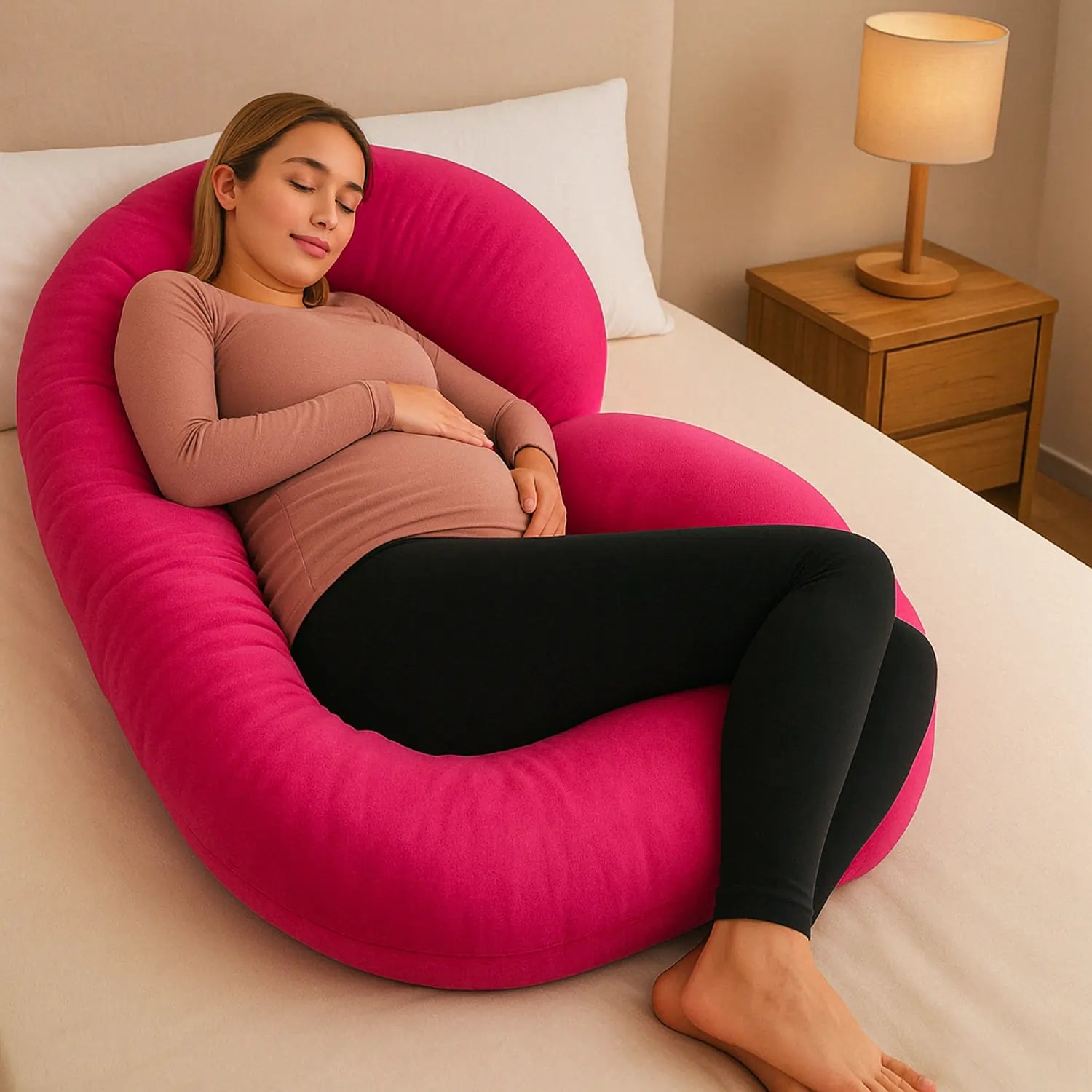
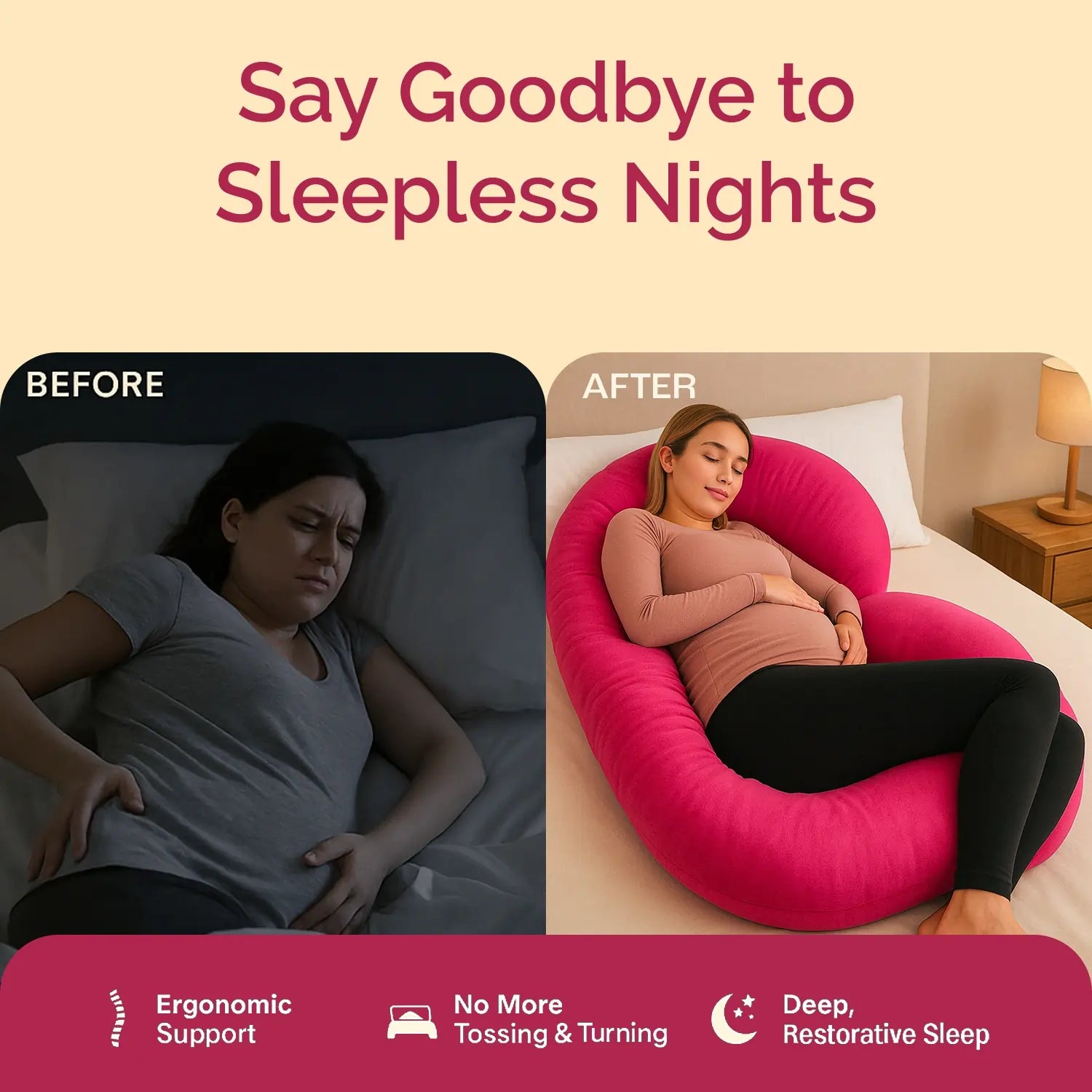
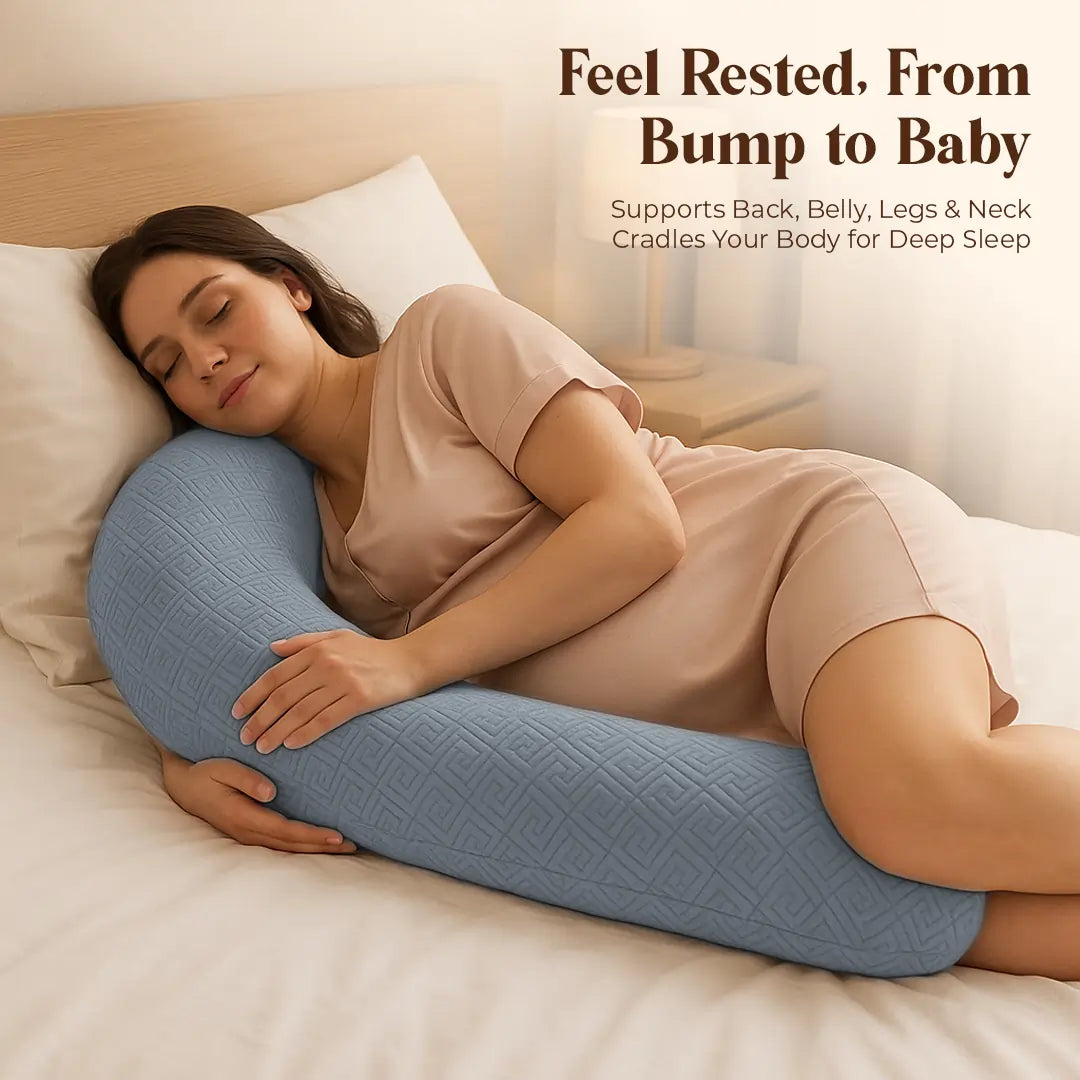
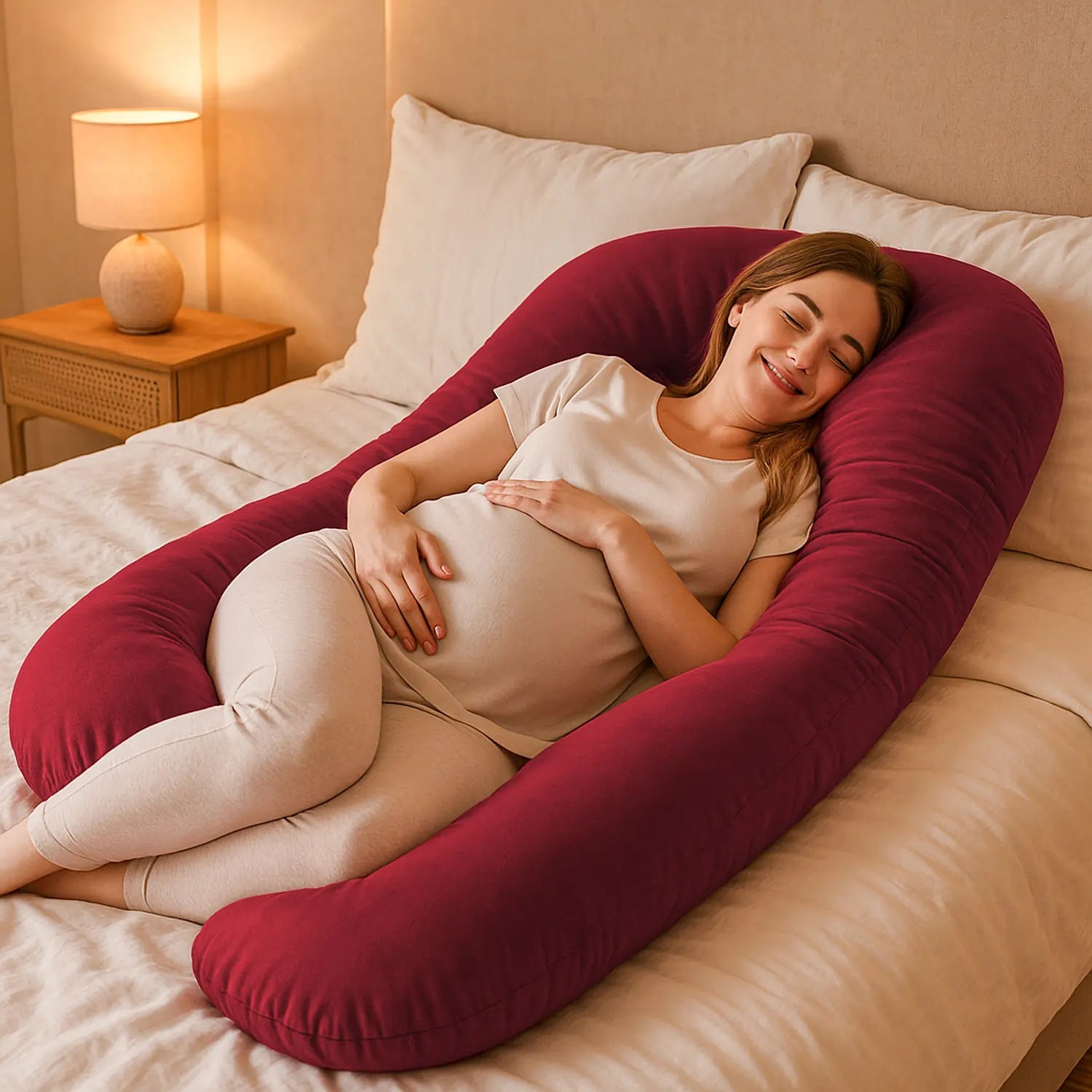
During the first trimester, you probably don’t have to change much about your existing sleep patterns. As pregnancy progresses, some positions may become uncomfortable because of a growing abdomen and changing shape. A pregnancy pillow, full-body pillow, or wedge pillow can be the best pregnancy pillow that adds support where you need it, whether that’s your belly, your knees, or to help with side sleeping.
This guide will help you to modify your sleep position, pillow position, and sleep setup during each trimester of your pregnancy. It also explains what common positioning errors to avoid, when to see a healthcare provider about ongoing sleep issues, and how to use a pregnancy pillow for sleep.
Recommended Products



Why Sleep Can Become Difficult During Pregnancy?
Pregnancy can make sleep difficult because hormonal changes, a growing abdomen, frequent urination, heartburn, and back or hip discomfort can disrupt normal sleep patterns.
Here are the common reasons sleeping during pregnancy becomes difficult:
-
Hormonal changes
Hormones can make you fatigued, interfere with sleep, and cause physical aches and pains.
-
Nausea
Nausea can cause difficulties in getting settled for a decent bedtime routine, particularly in the first trimester.
-
Frequent bathroom trips
Increased blood volume and pressure on the bladder can result in the urge to pee more often, including in the evening.
-
Larger Belly
As your belly grows, you may find your sleep positions difficult or need extra support.
-
Back, hip, or pelvic pain
Body weight and shape, and posture can make some positions painful.
-
Heartburn
These adjustments may also contribute to heartburn or reflux that might be more pronounced when you recline.
-
Leg cramps
Leg cramps can wake you up from sleep and make it difficult to get back to sleep.
-
Difficulty finding a comfortable sleeping position
As your pregnancy progresses, you will need to adapt your position and may need some extra pillows.
What is the Complete Sleep Setup during each Pregnancy Trimesters?
To create a comfortable sleep setup during pregnancy, adjust your sleeping position, pillow support, and bedroom setup as your body changes through each trimester. Here is the complete pregnancy sleep setup for each trimester .
1. First Trimester Sleep Setup
Stick with your current sleep setup during the first trimester if it feels good, and make only small modifications as pregnancy symptoms shift.
-
Stick to your normal sleep setup
If you’re in your first trimester, there’s no reason to change the way you sleep.
-
Use supportive bedding
Use a comfortable mattress and a pillow that supports your head and neck.
-
Bring on localized comfort as needed
If your or your partner’s position is losing its comfort factor, a Wedge Pillow can help introduce localized elevation or cushioning.
-
Consider a Pregnancy Pillow if so desired
A Pregnancy Pillow for sleeping can be used for comfort, but is typically not necessary this early on in pregnancy.
2. Second Trimester Sleep Setup
During the second trimester, adapt your sleep setup as your abdomen grows and you need more support around your body.
-
Add abdominal support
A Pregnancy Pillow can cushion a blossoming belly.
-
More Support Overall
A Full Body or Long Pillow can be the best pregnancy pillow that can support multiple areas without needing multiple separate pillows.
-
Increase your pillow height
A shift in your body shape may also impact how much height you require for proper alignment.
-
Change your setup frequently
When your current setup starts inducing pressure or strain, it is time to adjust your setup.
3. Third Trimester Sleep Setup
During the third trimester, prioritize a supportive and practical setup that accommodates your larger abdomen and changing body shape.
-
Use more targeted support
The Pregnancy Pillow also easily cradles the belly and lower body.
-
Consider a Full Body or Long Pillow
Use it when you want support across a broader expanse of your body.
-
Use a Wedge Pillow where appropriate
A wedge can offer targeted support without necessitating an entire sleep overhaul.
-
Make it manageable
Only put in the supports you need to keep the bed functional.
Best Sleeping Positions During Pregnancy
The safest position to go to sleep after 28 weeks of pregnancy is on your side, either left or right, with your knees and legs comfortably supported. Earlier in pregnancy, you can generally sleep in any position that feels comfortable.
Side Sleeping
Side sleeping is considered the best pregnancy sleeping position, especially critical in the third trimester. Both sides are comfortable as your belly grows, and you can switch sides in the middle of the night if one side feels uncomfortable.
Left-Side Sleeping
The left side is something people often recommend, but you do not have to sleep strictly on your left side. NHS advice is that either side is fine for sleeping after 28 weeks.
Right-Side Sleeping
The right side is also a recommended position for sleeping during pregnancy. Don’t stay on the left if it is uncomfortable; instead, roll to your right side.
Back Sleeping
You can often sleep on your back earlier in pregnancy if it feels comfortable to you. When you’re over 28 weeks, you should avoid sleeping on your back, in part because it has been linked to higher rates of stillbirth when it happens in the third trimester.
How to Use a Pregnancy Pillow?
To use a Pregnancy Pillow for sleeping, position it around your body to support your head, abdomen, back, hips, knees, and legs. The following are effective ways to use a pregnancy pillow .
-
Lie on your side
Lie on your side, preferably a side that would be comfortable to sleep on if you are later on in your pregnancy.
-
Support your head and neck
Angle the top of the pillow into your head and adjust the pillow height such that your neck is comfortable.
-
Bump support
If you have a developing belly, place a section of the pillow underneath your belly for gentle support.
-
Cushion your legs and knees
If you sleep on your side, put the pillow between your knees and legs for extra support.
-
For lumbar support
If you need extra padding when sleeping on your back, place the pillow behind your lower back.
-
Pillow fit
You want a pillow that cradles your head and body without pushing back on you, or otherwise restricting your ability to move around comfortably.
Pregnancy Pillow Positions for Better Support
For better support, place a Pregnancy Pillow between your knees, under your abdomen, or behind your back while side sleeping. Choose the right pregnancy sleeping position that supports the area causing discomfort without putting pressure on your body.
-
Between the Knees and Thighs
Place the Pregnancy Pillow between your thighs, and lay it longways with your knees bent. It provides some support for your legs, which side sleeping improves.
-
Under the Growing Belly
If you are on your side, stick a Pregnancy Pillow under your belly to support your growing belly. You want to gently comfort, not to shove the pillow into your abdomen.
-
Behind the Back
If you are sleeping on your side, place the Pregnancy Pillow behind your back for support. If you are a positional sleeper, this can also provide you with a steady surface to lean against.
-
Along the Legs
When additional support beyond the knees is desired, extend the pillow down the lower legs. Continue adjusting until it feels comfortable under your legs.
-
Around the Body
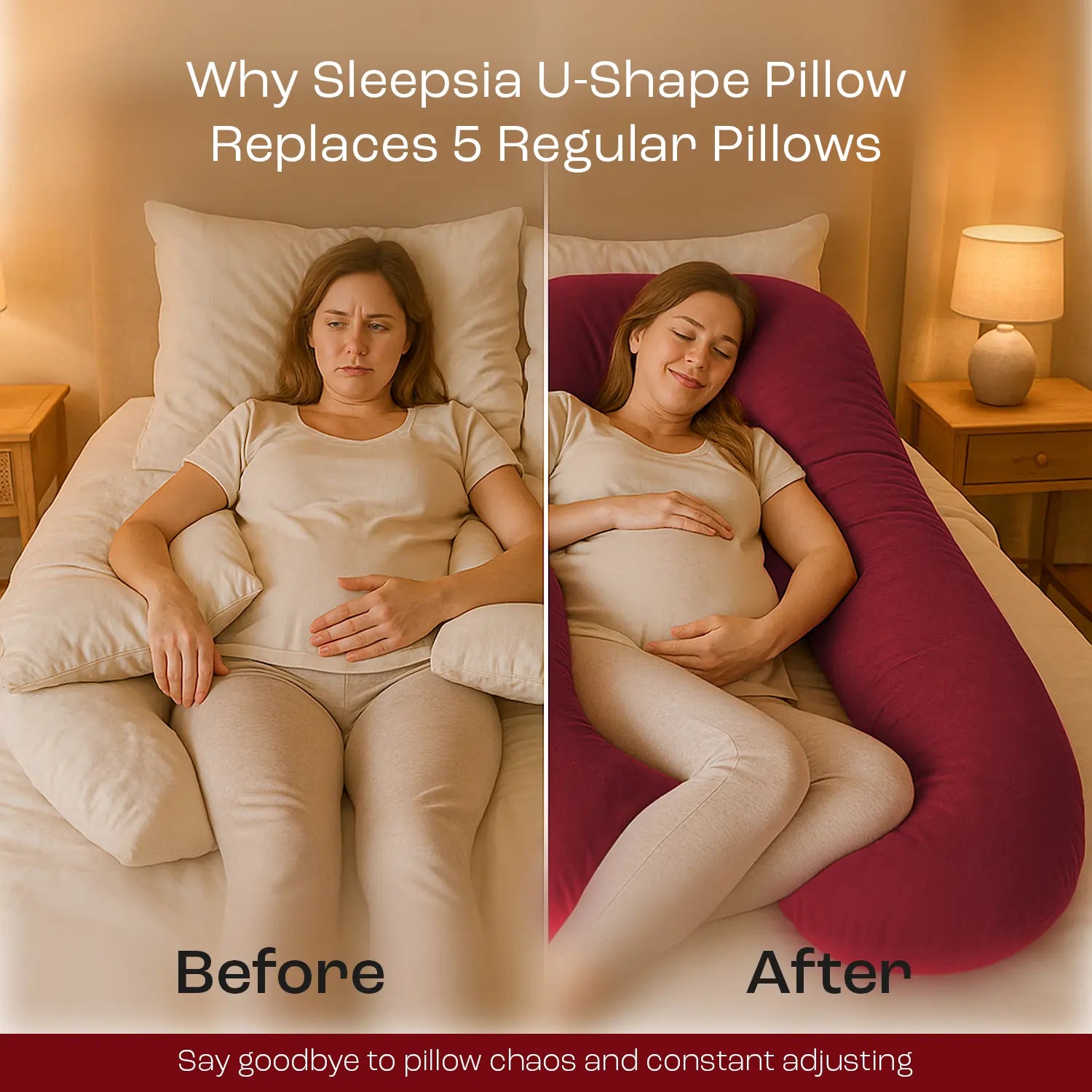
A U-Shaped Pregnancy Pillow wraps around the front and back of your body and provides support on either side. This C-shaped pillow can support your head, torso, or legs, depending on where you want that support, as well as molding to your body.
-
Choose the Position That Feels Comfortable
Don’t use every part of a Pregnancy Pillow at once. Move it into place where you need support, and when you start feeling unsupported, flip sides or reposition the pillow.
What are the Tips On Using a Wedge Pillow During Pregnancy?
To use a Wedge Pillow during pregnancy, place it under or beside the area that needs targeted elevation or cushioning, such as your abdomen, back, upper body, or knees.
-
Under the Belly
Lie on your side and slide the thicker side of the Wedge Pillow just under your abdomen. Gentle cushions to support your expanding belly without pushing against it.
-
Behind the Back
If you are a side sleeper, place the Wedge Pillow horizontally along your lower back. This provides support to lean against and cushioning around your lower back.
-
Under the Upper Body
To elevate your upper body, place the Wedge Pillow under your head, shoulders, and upper back. This higher position may be more comfortable if lying flat increases heartburn or reflux.
-
Between the Knees or Thighs
If you sleep on your side, put a smaller Wedge Pillow between your knees or thighs. Maintain a bend in the knees, and use the wedge to keep the legs in a natural position.
-
Adjust the Wedge for Comfort
Select a wedge of appropriate height and angle to give you stability and not put pressure on your abdomen, back, or legs. Move it around as your sleep situation changes.
Common Pregnancy Sleep Mistakes
The most common pregnancy sleep mistakes include using incorrect pillow support, staying in an uncomfortable position, and ignoring ongoing sleep difficulties. Here are the key pregnancy sleep mistakes to avoid.
- Sleeping in an Uncomfortable Position
- Using More Pillows Than Necessary
- Choosing an Incorrect Pillow Height
- Positioning the Pregnancy Pillow Incorrectly
- Neglecting the Sleep Environment
- Relying Only on Pillows for Better Sleep
- Panicking After Waking Up on Your Back
- Overlooking Persistent Sleep Difficulties
What are the Tips for Creating a Comfortable Pregnancy Sleep Environment?
To create a comfortable pregnancy sleep environment, keep your bedroom cool, dark, quiet, and free from unnecessary distractions. Here are the key tips to create a comfortable pregnancy sleep environment .
-
Keep the Room Cool
Avoid overheating at night by keeping the room at a comfy temperature.
-
Stop Excess Light
Use blackout curtains, blinds, or an eye mask to darken the bedroom when you are sleeping.
-
Minimize Noise
Avoid jarring noises, and consider continuous noise if it helps you sleep less intermittently.
-
Select Breathable Bed Clothes
Choose lightweight, breathable sheets and blankets.
-
Clear Space Next to the Bed
Ensure you have enough space alongside the bed to access and organize your sleeping area.
-
Keep Nighttime Essentials Nearby
Keep water and other necessities within arm's reach to eliminate late-night trips.
-
Keep a Consistent Sleep Schedule
Get up and go to bed at the same time every day.
-
Limit Screen Time Before Bed
Cut down on phone, tablet, and computer use leading up to bedtime to allow for a calmer transition to sleep.
When to Talk to a Healthcare Professional?
Speak to a healthcare provider if your sleep issues in pregnancy are long-lasting, acute, or impact your daily life. You also should see a doctor if you have persistent pain or discomfort, frequent or severe heartburn, loud snoring and breathing that stops or gasps during sleep, symptoms of restless legs, or anything else that worries you.
Disclaimer: The following article is general information on sleep and comfort during pregnancy, and is not medical advice, diagnosis, or treatment. Each pregnancy is unique; seek the advice of your obstetrician or other qualified health care professional about your particular case.
Conclusion
The best pregnancy sleep setup in each trimester combines a comfortable pregnancy sleeping position with appropriate support from a Pregnancy Pillow, Wedge Pillow, or Full Body Pillow. You can sleep on your back and stomach during the early part of your first trimester, but by your second and third trimesters you may want to start adding a little support for your growing belly as well as your back, hips, knees, and legs.
Avoid common sleep setup mistakes, create a cool, comfortable sleep environment, and change where you place your pillows and how you position your body as your body changes. Consult a professional if your sleep troubles are chronic, severe, or interfere with daily functioning.
FAQs
Q1: What mattress firmness works best during pregnancy?Ans: A medium-firm mattress offers support and does not lead to excessive sinking in.
Q2: Is softer better for sleeping while pregnant?Ans: Yes, a too soft mattress could allow your body to sink too deeply, which could also make it harder to change positions and get comfortable.
Q3: What are the best fabrics for pregnancy bedding?Ans: Comfort or the feeling of being too warm in bed can be alleviated by using lighter fabrics that are more breathable.
Q4: Why do I feel unusually hot in bed during pregnancy?Ans: The hormonal and physical changes that happen during pregnancy may also contribute to feeling warmer, which can make a cool bedroom and breathable bedding more comfortable.
Q5: When should I consider replacing my mattress during pregnancy?Ans: If your mattress isn’t providing adequate support, is painful, or does not help you sleep, it is probably time to replace it.
Q6: What are the benefits of using an adjustable bed while pregnant?Ans: An adjustable bed can let you change your upper-body or leg position to find a more comfortable resting posture.
Q7: How can regular pillows support pregnancy sleep?Ans: Regular pillows can provide additional cushioning for areas such as the head, legs, or abdomen when positioned comfortably.
Q8: What makes a bed easier to access during late pregnancy?Ans: A solid support nearby, comfortable bed height, and clear space on the floor can help with getting into and out of bed during pregnancy.
Q9: Which sleepwear is most comfortable during pregnancy?Ans: Loose, breathable sleepwear that allows easy movement and does not put unnecessary pressure around the abdomen is generally comfortable.
Q10: Why am I still waking up despite improving my pregnancy sleep setup?Ans: Persistent waking can have several causes during pregnancy, so discuss ongoing sleep disruption.
Recent Posts

Benefits of Padmasana (Lotus Pose) & How to Practice It

Contour Pillow vs Cervical Pillow: What's the Difference?

Butterfly Pillow vs Standard Pillow: Which Is Better for Neck Pain?

Benefits of Poorvottanasana (Upward Plank Pose) & How to Practice It

Winter Sleep Essentials: Layering Bedsheets and Nightwear

Frozen Shoulder & Nighttime Pain: Pillow Positioning Tips

